


Buffett Lumps Prediction Markets With Sports Betting in ‘Tax on Stupidity’ Rebuke
(Originally posted on : Bitcoin News )
Key Takeaways:
- Warren Buffett groups prediction markets with sports betting in a CNBC interview.
- Buffett says state gambling revenue “relieves the taxes on me or other rich people.”
- Bernstein projects prediction market volume will hit $240 billion in 2026.
Trade Press Has Skipped the Prediction-Markets Line
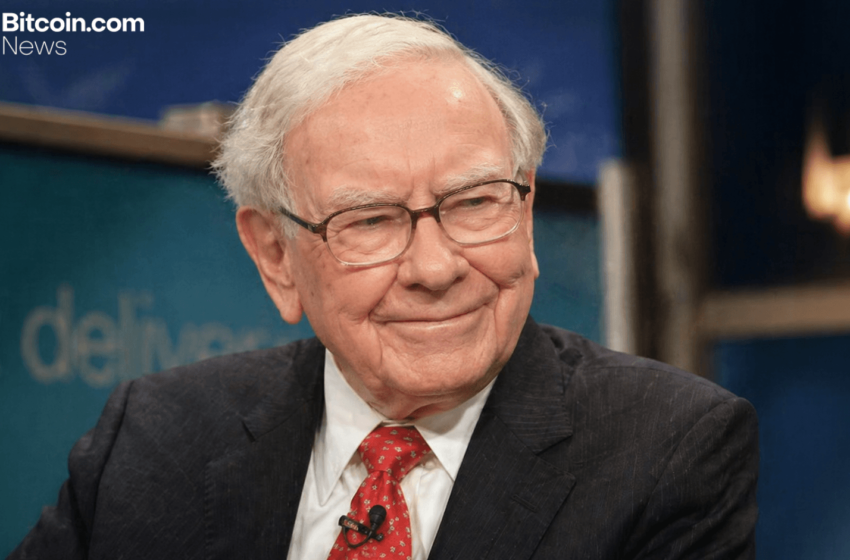
The 95-year-old investor sat with CNBC’s Becky Quick on March 31 in his first major interview since handing the Berkshire Hathaway CEO role to Greg Abel at the start of the year. The transcript, published by CNBC, shows Quick asking Buffett directly whether he disapproved of “ prediction markets, of legalized sports gambling, even of day trading.”
Buffett did not separate the categories. “To the extent that the states raise money from people who [think] the dollar really means something to them, actually relieves the taxes on me or other rich people. I mean, it’s not direct, but it’s the net effect.” Asked by Quick whether the framing matched her father’s old line that the lottery was a tax on the stupid, Buffett agreed, stating:
“It’s a tax on stupidity.”
The position is not new for Buffett. He used nearly identical language at Berkshire’s 2007 annual meeting, calling gambling in general “a tax on ignorance” and describing state-sponsored betting as socially revolting. What is new is the explicit mention of prediction markets, which have spent the past 18 months arguing they are not gambling – alongside legal sports betting and retail day trading. Buffett accepted the framing without modification.
Mainstream coverage of the interview ran on March 31 and focused on Buffett’s investment views, his comments on Apple, and his retirement framing. The sports-betting angle resurfaced this past weekend after The Growth Podcast host Aakash Gupta pulled the gambling clip and laid out the math behind Buffett’s argument: nine US states have no state income tax, seven of those nine run state lotteries, and seven of those nine have legalized sports betting.
Front Office Sports picked up the angle on April 27, with Yahoo Sports syndicating the same day. None of the major trade press coverage has flagged the prediction-markets bundling, but it’s an important insight into coherent legal and cultural arguments against the framing Kalshi, Polymarket, and the federal-lane operators are pushing, namely that event contracts are derivatives, not bets. The CFTC under the Trump administration has moved sharply toward the operators’ position, while state regulators in Arizona, New Jersey, Romania, and others continue to argue that the platforms are running unlicensed gambling under different branding.
CNBC has its own commercial relationship with Kalshi and a minority investment in the company, disclosed in its April 14 prediction-markets coverage but not in the Buffett interview transcript.
Adam Hoffer, director of excise tax policy at the Tax Foundation, told Front Office Sports that he understood Buffett’s position. “Gambling, in general, is a losing proposition,” Hoffer said. “The house always wins. Piling on taxes only makes the return on investment even worse for gamblers.” Hoffer added that wealthier Americans spend a smaller share of income on gambling than lower-income households – a pattern, he said, “governments know.”
US sports-betting revenue alone hit $16.96 billion in 2025, up nearly 23% year-over-year, according to the American Gaming Association. State-regulated sportsbooks generated $3.71 billion in taxes, up 32.4% from 2024. Forty US states plus Washington, D.C. now offer some form of legal online sports betting.
Prediction-markets advocates argue the regulatory framework around event contracts is fundamentally different – federally regulated derivatives rather than state-licensed gambling. Buffett’s interview does not engage with that argument. He treats the categories as variations on the same underlying mechanic: a state-blessed wager that disproportionately extracts wealth from people who can least afford to lose it.
Whether the negative framing breaks through ultimately depends on what regulators and courts do next. New ETF filings reported by CNBC last week would let retail investors buy event-contract exposure inside retirement accounts — pushing the products further into the mainstream financial system. The state-versus-CFTC fight continues. And Buffett, now retired but still the most quoted living investor in American business, has placed prediction markets squarely on the wrong side of his sucker-game test.



 Bitcoin
  Ethereum
  Tether
  BNB
BNB  USDC
USDC  XRP
XRP  Solana
  TRON
TRON  Hyperliquid
  Figure Heloc
  Lido Staked Ether
  Dogecoin
  USDS
USDS  Rain
Rain  Zcash
Zcash  LEO Token
  Monero
  Wrapped stETH
  Chainlink
  WhiteBIT Coin
  Wrapped Bitcoin
  Cardano
  Binance Bridged USDT (BNB Smart Chain)
  Stellar
  Wrapped Beacon ETH
  Dai
Dai  Bitcoin Cash
  Ethena USDe
  Wrapped eETH
  USD1
USD1  Gram (prev. Toncoin)
  sUSDS
sUSDS  Canton
  Litecoin
  Global Dollar
  Coinbase Wrapped BTC
  Circle USYC
  Hedera
  PayPal USD
  WETH
WETH  BlackRock USD Institutional Digital Liquidity Fund
  Avalanche
  Sui
Sui  USDT0
USDT0  Tether Gold
  Shiba Inu
  MemeCore
  Cronos
  Ondo US Dollar Yield
  OKB
OKB  NEAR Protocol
  Ethena Staked USDe
  Uniswap
  World Liberty Financial
  PAX Gold
  Bittensor
  Bitway
  Ripple USD
  Aster
Aster  Ondo
Ondo  USDD
USDD  HTX DAO
  Little Pepe
  Mantle
  Wrapped BOT
  syrupUSDC
  Aave
Aave  Falcon USD
  Morpho
  Sky
Sky  BFUSD
BFUSD  Polkadot
  United Stables
  Internet Computer
  USDGO
USDGO  Bitget Token
  Pump.fun
  Spiko Amundi Overnight Swap Fund (EUR)
  Worldcoin
  Pepe
Pepe  Ethereum Classic
  Jupiter Perpetuals Liquidity Provider Token
  Blockchain Capital
  Pi Network
  Invesco Short Duration US Government Securities Fund
  Spiko EU T-Bills Money Market Fund
  KuCoin
  Jito Staked SOL
  JUST
JUST  POL (ex-MATIC)
  Kelp DAO Restaked ETH
  Janus Henderson Anemoy Treasury Fund
  Ethena
  Binance-Peg WETH
  Quant
Quant  Rocket Pool ETH
  Stable
  Cosmos Hub
  Binance Bridged USDC (BNB Smart Chain)
  Kaspa
Kaspa