


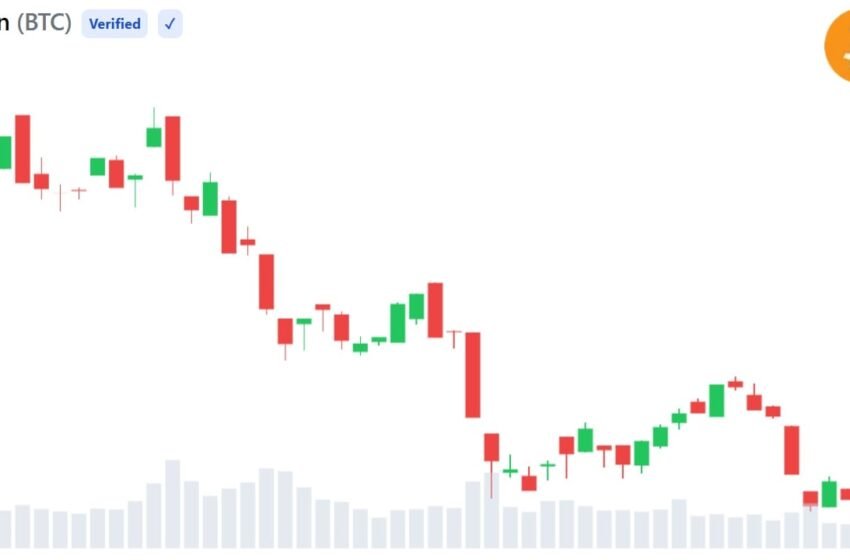
Bitcoin Flashes ‘End of Bear’ Signal as Cost Basis Crossover Suggests Final Bear Market Phase
(Originally posted on : Bitcoin News )
Key Takeaways
- Bitcoin’s short-term holder cost basis has crossed below the adjusted long-term holder level, triggering an “end of bear market” signal.
- The short-term holder cost basis has fallen from $112,500 to $69,000, consistent with recently acquired bitcoin changing hands at lower prices.
- The signal points to a late-stage bear market, not a confirmed bottom or new bull cycle.
Bitcoin’s Bear Market May Be Entering Its Final Phase
Blockchain analytics platform Cryptoquant shared an analysis on July 18 suggesting bitcoin’s bear market may be approaching its final stage. The signal compares the average acquisition prices of short-term and long-term holders.
The analyst said:
“The end of the bear market is approaching.”
Cost basis refers to the average price at which investors acquired bitcoin. Short-term holders, or STHs, have held bitcoin for less than six months, while long-term holders, or LTHs, have held the crypto for more than six months.
The signal appeared when the STH cost basis fell below the adjusted LTH cost basis. The crossover indicates that the average cost basis of short-term holder supply has fallen below that of adjusted long-term holder supply.
The analyst explained:
“The end-of-bear-market signal has just flashed. This signal is defined by the downward crossover of the STH/LTH cost basis (with a 3-day confirmation window to validate the signal).”
The crossover marks a shift in holder positioning rather than an exact market bottom. Bitcoin could remain volatile or trade lower before a sustained recovery develops.
Chart Shows the Crossover Sequence Across Bitcoin Cycles
The chart included in the analysis plots bitcoin’s price alongside the short-term holder (STH) cost basis and the adjusted long-term holder (LTH) cost basis. It also marks “end of bear” signals and later upward crossovers that the analysis associates with confirmed bull-market phases.
The newest “end of bear” marker appears where the STH cost basis falls below the adjusted LTH cost basis. Earlier cycles show the same sequence: a downward crossover, followed later by an upward crossover and bull-market confirmation.
The interval between the “end of bear” and bull-market confirmation markers shows that bitcoin can remain in a transitional phase after the initial signal. The first crossover points to the bear market’s final stage, while the later reversal suggests the average cost basis of newer buyers is rising progressively.
Falling Cost Basis Reflects Buying at Lower Prices
According to the analysis, the short-term holder cost basis has declined from $112,500 to $69,000. The drop is consistent with bitcoin acquired within the past six months changing hands at lower prices.
This activity reduced the average STH acquisition price. The LTH cost basis changes more gradually because it reflects bitcoin accumulated over a longer period. The adjusted LTH calculation excludes bitcoin held for more than seven years. The exclusion limits the influence of dormant supply and focuses the metric on long-term holdings considered economically active.
The analysis presents the crossover as a recurring feature of bitcoin cycles: short-term holders accumulate bitcoin during prolonged declines until their average cost basis falls below that of active long-term holders. It also argues institutional participation has not fundamentally changed this pattern.
Signal Supports DCA Before Bull-Market Confirmation
The analysis describes the crossover as the start of a late-stage accumulation period rather than confirmation that prices will immediately recover.
The analyst noted:
“This doesn’t mean the bear market ends the moment the signal fires and the bottom is in, but it indicates we are entering its final phase, a period during which establishing a DCA makes sense.”
Dollar-cost averaging, or DCA, involves investing fixed amounts over time rather than committing all capital at one price. The strategy reduces reliance on identifying the exact market bottom.
Under the analyst’s framework, a bull market would require the short-term holder cost basis to rise back above the adjusted long-term holder level. That upward crossover would match the confirmation observed in earlier cycles and suggest that recently acquired bitcoin is changing hands at progressively higher average prices. Until then, the signal suggests bitcoin’s bear market may be nearing its end without confirming that a new bull cycle has begun.



 Bitcoin
  Ethereum
  Tether
  BNB
BNB  XRP
XRP  USDC
USDC  Solana
  TRON
TRON  Lido Staked Ether
  Zcash
Zcash  Figure Heloc
  Hyperliquid
  Dogecoin
  Monero
  WhiteBIT Coin
  Rain
Rain  Wrapped stETH
  Chainlink
  Wrapped Bitcoin
  USDS
USDS  Binance Bridged USDT (BNB Smart Chain)
  Cardano
  LEO Token
  Wrapped Beacon ETH
  Stellar
  Uniswap
  NEAR Protocol
  Wrapped eETH
  Bitcoin Cash
  sUSDS
sUSDS  Avalanche
  Ethena USDe
  Litecoin
  Canton
  Coinbase Wrapped BTC
  Dai
Dai  USD1
USD1  Sui
Sui  WETH
WETH  Hedera
  Gram (prev. Toncoin)
  Bittensor
  USDT0
USDT0  Shiba Inu
  MemeCore
  Cronos
  Global Dollar
  PayPal USD
  Tether Gold
  OKB
OKB  Ethena Staked USDe
  Circle USYC
  Ripple USD
  BlackRock USD Institutional Digital Liquidity Fund
  Aave
Aave  Ondo US Dollar Yield
  Ondo
Ondo  Ethena
  Mantle
  Bitway
  Pepe
Pepe  Little Pepe
  Wrapped BOT
  syrupUSDC
  Pump.fun
  Polkadot
  Aster
Aster  PAX Gold
  Morpho
  World Liberty Financial
  Worldcoin
  Internet Computer
  Sky
Sky  HTX DAO
  Arbitrum
  Venice Token
  Bitget Token
  USDD
USDD  Spiko Amundi Overnight Swap Fund (EUR)
  Ethereum Classic
  Jupiter Perpetuals Liquidity Provider Token
  United Stables
  USDGO
USDGO  Falcon USD
  Akedo
Akedo  BFUSD
BFUSD  Jito Staked SOL
  Kaspa
Kaspa  POL (ex-MATIC)
  Kelp DAO Restaked ETH
  Gate
Gate  Lighter
  Binance-Peg WETH
  Rocket Pool ETH
  Pi Network
  KuCoin
  Algorand
  Binance Bridged USDC (BNB Smart Chain)
  Jupiter
  Quant
Quant