

UK Orders Crypto Fraudsters to Repay £851,402 to Scam Victims
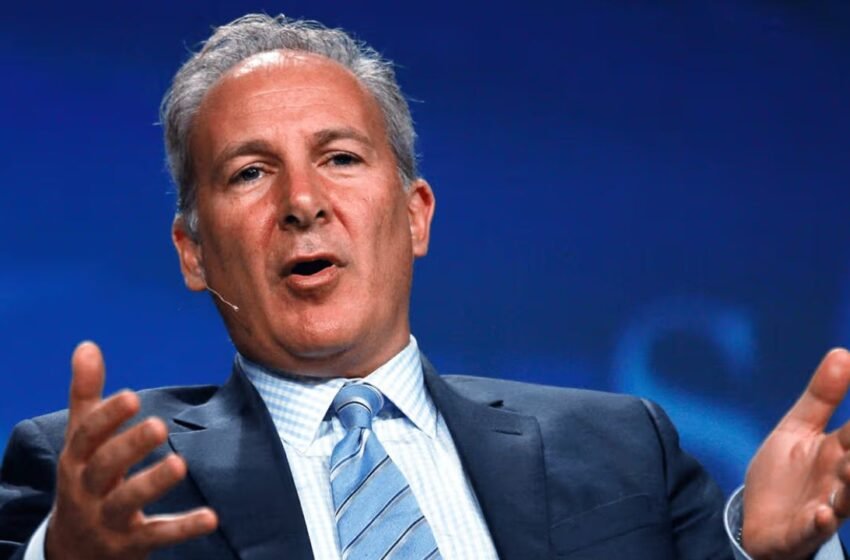
Peter Schiff Says Japan Could Be the Pin That Pricks the Bigger US Bubble
(Originally posted on : Bitcoin News )
Key Takeaways
- Alphabet (Google) fell 10% and Oracle dropped 41% in 2026 as investors questioned AI capex spending.
- Japan’s 30 year bond yield hit a record near 4% while the yen hit a 40 year low.
- Peter Schiff says Japan’s $1.1 trillion in Treasuries could face selling pressure ahead.
Speaking on The Peter Schiff Show Podcast, the economist and longtime Bitcoin critic said the AI trade cracked open this week even as broader indexes held up. Alphabet fell 10% after the company announced higher capital spending than investors expected. Oracle dropped nearly 8% on the week and is now down 41% for the year. Meta fell 7.3%, Amazon lost 6.8%, and Microsoft slipped 2.7%, pushing its year to date decline to 19.3%, close to bear market territory.
Schiff said the market’s reaction marks a shift from prior quarters, when hyperscalers announcing bigger artificial intelligence (AI) budgets typically saw their share prices climb. “Investors are now finally starting to question whether or not these investments are in fact going to pay off,” he said.
SpaceX and Tesla Take the Brunt
SpaceX shares dropped another 7.7% during the week and now trade 49% below the stock’s post IPO high. The company’s public float is set to expand from 5% to 40% of shares by the end of the year, a change Schiff explained could add further pressure on the stock.
Tesla fell 18% over the same stretch and sits 35% below its 52 week high. Together, the declines in Tesla and SpaceX cost Elon Musk close to $100 billion in a single week, according to Schiff’s estimates.
A Dot-Com Comparison
The gold proponent and economist compared the roughly three-quarters of a trillion dollars in annual AI capital spending to the buildout that preceded the dot-com crash. He said many of the early internet favorites that investors poured money into eventually went bankrupt without ever recovering their spending. He does not doubt the long term potential of AI, but argued markets are overestimating near term returns on hyperscaler investment.
Japan’s Bond Market Under Strain
Schiff pointed to Japan as a bigger and more immediate risk than the AI selloff. The yen fell to its lowest level against the dollar in 40 years. Japan’s 30-year government bond yield closed near 4%, a record for that maturity, while the 10-year JGB yield climbed to levels last seen in 1996.
Japan’s public debt exceeds 200% of gross domestic product, and the country’s benchmark policy rate remains at just 1%. Schiff said the Bank of Japan faces a choice between raising rates aggressively, which could trigger a domestic recession and a wave of repatriated capital, or staying passive and risking a currency collapse. Either path, Schiff stressed, has consequences for the United States.
Japan holds more than $1.1 trillion in U.S. Treasuries, the largest foreign holding of any nation. Schiff said a Japanese debt crisis could force large-scale selling of that position. “It may be the pin that pricks our bubble,” he said of Japan’s situation relative to the U.S. economy. Schiff added:
“The Japanese bubble popping ends up pricking the even bigger U.S. bubble.”
U.S. Treasury Yields Hit Multi-Decade Highs
The 30 year U.S. Treasury yield closed the week at 5.16%, the highest level since 2006, while national debt has surpassed $39.6 trillion. Schiff noted the government is carrying more than four times the debt it held in 2006, making today’s borrowing costs harder to absorb than the last time yields were this high.
Oil, Gold, and Inflation Pressure
Oil prices climbed above $100 a barrel and are up roughly 30% in July alone, driven by tensions tied to Iran. Schiff said the increase all but guarantees a hotter Consumer Price Index reading when July data is released in August.
Gold rose about 1% on the week despite the jump in bond yields and oil prices, a combination Schiff called notable given gold’s recent inverse relationship with oil since the Iran conflict began. Mining stocks outperformed the metal, with the GDX index up 5.6% and the GDXJ up 5.8%, a move Schiff read as a possible signal that a bottom is forming in the sector.
Labor Market and Trump’s Tariffs
Schiff also challenged the Trump administration’s framing of a recent drop in weekly jobless claims to 187,000, arguing the growth of gig work and weak hiring trends make the metric far less meaningful than in past decades. Separately, he criticized new tariffs imposed on roughly 60 countries under a provision of the Trade Act of 1974 aimed at goods linked to forced labor, calling the policy an unconstitutional tax that ultimately falls on American consumers rather than foreign governments.


 Bitcoin
  Ethereum
  Tether
  BNB
BNB  XRP
XRP  USDC
USDC  Solana
  TRON
TRON  Lido Staked Ether
  Figure Heloc
  Zcash
Zcash  Hyperliquid
  Dogecoin
  Chainlink
  Monero
  Wrapped stETH
  USDS
USDS  WhiteBIT Coin
  Cardano
  Wrapped Bitcoin
  Rain
Rain  Binance Bridged USDT (BNB Smart Chain)
  Wrapped Beacon ETH
  LEO Token
  Stellar
  NEAR Protocol
  Bitcoin Cash
  Wrapped eETH
  Uniswap
  sUSDS
sUSDS  Litecoin
  Avalanche
  Canton
  Ethena USDe
  Coinbase Wrapped BTC
  Sui
Sui  Dai
Dai  Hedera
  WETH
WETH  USD1
USD1  Quant
Quant  Gram (prev. Toncoin)
  USDT0
USDT0  Bitway
  Bittensor
  Shiba Inu
  Tether Gold
  Cronos
  Global Dollar
  PayPal USD
  Ethena Staked USDe
  Pump.fun
  OKB
OKB  Ripple USD
  Ethena
  Aave
Aave  Ondo
Ondo  Circle USYC
  MemeCore
  Ondo US Dollar Yield
  Little Pepe
  BlackRock USD Institutional Digital Liquidity Fund
  Wrapped BOT
  syrupUSDC
  Mantle
  Polkadot
  Aster
Aster  Sky
Sky  Worldcoin
  Internet Computer
  PAX Gold
  World Liberty Financial
  Pepe
Pepe  Morpho
  HTX DAO
  USDD
USDD  United Stables
  Spiko Amundi Overnight Swap Fund (EUR)
  Ethereum Classic
  Bitget Token
  Jupiter Perpetuals Liquidity Provider Token
  Arbitrum
  Falcon USD
  BFUSD
BFUSD  Venice Token
  POL (ex-MATIC)
  Jito Staked SOL
  Kaspa
Kaspa  USDGO
USDGO  Kelp DAO Restaked ETH
  Gate
Gate  Algorand
  Binance-Peg WETH
  Rocket Pool ETH
  Jupiter
  JUST
JUST  Pi Network
  Binance Bridged USDC (BNB Smart Chain)
  KuCoin
  Render