


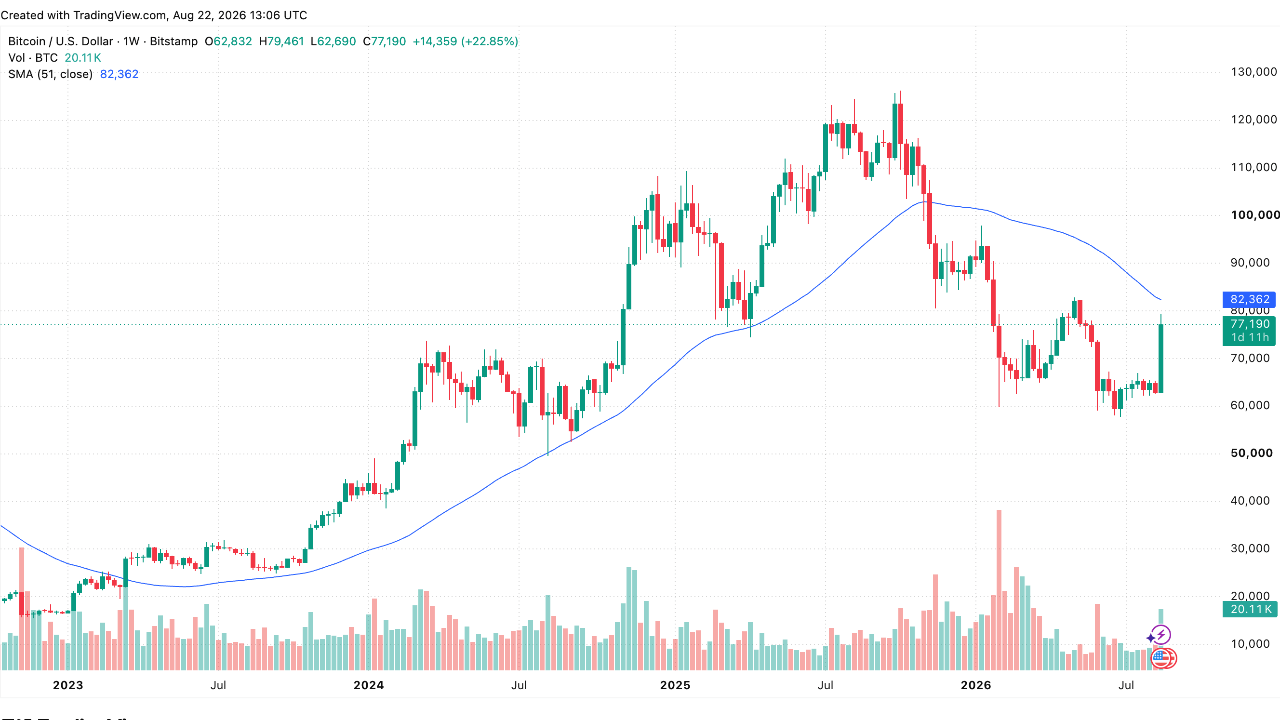
Galaxy Says Bitcoin Needs $82,470 Reclaim to Confirm Bear-Market End

Illinois’ 0.2% Crypto Tax Sparks a Full-Blown Courtroom War
(Originally posted on : Bitcoin News )
Key Takeaways
- Blockchain Association sued Aug. 21 to block Illinois’ 0.2% digital asset tax.
- Illinois’ 0.2% levy could tax trades, transfers and custody beginning Jan. 1.
- Crypto Council for Innovation wants enforcement blocked before Jan. 1, 2027.
The Blockchain Association and Crypto Council for Innovation filed the complaint on Aug. 21 in Sangamon County Circuit Court against Illinois Department of Revenue Director David Harris, Attorney General Kwame Raoul, and Sangamon County State’s Attorney John Milhiser. They want the Digital Asset Tax Act declared unlawful and preliminary and permanent injunctions blocking enforcement.
Crypto Groups Take Aim at a Tax With No Real Peer
The battle starts with how Illinois calculates the levy. Rather than taxing a customer’s profit, the law grabs 0.2% of the digital asset’s value when certain activities run through a digital asset broker. The complaint says the tax can hit even when a customer “buys nothing, sells nothing, gains nothing, and transfers no ownership.”
That means swapping bitcoin, shifting it between accounts or paying a company to custody it could trigger tax. The complaint says Illinois previously treated digital assets much like other financial property for tax purposes, with income or capital gains potentially taxable, while the transaction or custody service generally stayed untouched. That changes Jan. 1.
That gap sits at the heart of the case. Illinois does not slap an equivalent transaction tax on someone buying stock, wiring money between personal accounts or storing cash, gold or securities with a bank or broker. Plaintiffs say the state is effectively taxing the rails used to hold or move value instead of the actual economic transaction.
One Crypto Trade Could Open a Tax Pandora’s Box
Things get uglier when a platform performs several services at once. A crypto purchase can involve an exchange, a transfer into the customer’s account and ongoing custody by the platform. The complaint says the law never clearly answers whether that ordinary sequence creates one, two or three taxable events.
Custody creates another headache because storage runs continuously instead of happening once. The filing says the state of Illinois never explains whether a year of custody counts as one taxable occurrence, whether every billing period creates another or whether a changing account balance starts a fresh one. According to the complaint, the answer could swing tax bills “by orders of magnitude.”
The statute also leaves plaintiffs wondering how an asset’s taxable “value” is actually calculated. The complaint says the law never specifies whether valuation happens when an instruction is submitted, when a broker executes it or when the transaction finally settles.
Illinois Location Rules Leave Brokers Holding the Bag
Figuring out whether a customer is actually in Illinois creates another trap. Account records, mailing addresses, IP addresses, and other information can trigger a presumption that a customer sits inside the state. The broker then has to prove otherwise, and the filing says conflicting data can leave platforms guessing.
Those guesses carry serious consequences. The complaint says brokers face civil and criminal penalties for getting compliance wrong, while companies are already burning money on lawyers, tax advisers and system changes before the effective date. Plaintiffs say some firms may ultimately cut off customers who could be in Illinois rather than gamble with felony liability.
A 1,624-Page Bill Supercharges the Constitutional Brawl
The groups are also going after how the tax became law. Senate Bill 3019 started as a two-page agricultural-finance measure before May 31 amendments blew it into a sprawling 1,624-page package covering numerous subjects. The Digital Asset Tax Act made up fewer than 20 pages of the finished bill. The latest lawsuit follows the suit initiated by the Digital Chamber against Illinois in July.
According to the complaint, lawmakers gave the public roughly an hour’s notice for committee hearings before the legislation cleared both chambers within 24 hours. Plaintiffs argue that the process violated Illinois constitutional requirements while producing a law whose basic obligations remain murky despite felony-backed enforcement.
The lawsuit also claims the tax violates the federal Internet Tax Freedom Act by discriminating against electronic commerce, runs afoul of the dormant Commerce Clause, and violates state and federal due-process protections. The groups also raise the Illinois Uniformity Clause and legislative-process claims. They say any one of those defects could be enough to kill the law.
The immediate showdown is whether Illinois gets to start enforcing the tax Jan. 1. The Blockchain Association and Crypto Council for Innovation want the court to block enforcement before businesses must register and start collecting, turning the next four months into a test of whether one state can slap a special tax on financial activity simply because it happens through digital assets.

 Bitcoin
  Ethereum
  Tether
  XRP
XRP  BNB
BNB  USDC
USDC  Solana
  TRON
TRON  Lido Staked Ether
  Figure Heloc
  Hyperliquid
  Dogecoin
  Zcash
Zcash  Rain
Rain  USDS
USDS  Chainlink
  Wrapped stETH
  LEO Token
  Cardano
  Wrapped Bitcoin
  WhiteBIT Coin
  Binance Bridged USDT (BNB Smart Chain)
  Monero
  Wrapped Beacon ETH
  Stellar
  Bitcoin Cash
  Canton
  Wrapped eETH
  Dai
Dai  Ethena USDe
  sUSDS
sUSDS  Litecoin
  Gram (prev. Toncoin)
  USD1
USD1  Coinbase Wrapped BTC
  Hedera
  Sui
Sui  Global Dollar
  WETH
WETH  Avalanche
  Shiba Inu
  Circle USYC
  USDT0
USDT0  PayPal USD
  Cronos
  Tether Gold
  Uniswap
  BlackRock USD Institutional Digital Liquidity Fund
  MemeCore
  NEAR Protocol
  Ethena Staked USDe
  OKB
OKB  Bittensor
  Ondo US Dollar Yield
  Ripple USD
  PAX Gold
  Aave
Aave  World Liberty Financial
  Pump.fun
  Ondo
Ondo  Aster
Aster  Little Pepe
  Wrapped BOT
  syrupUSDC
  Pepe
Pepe  Mantle
  HTX DAO
  Polkadot
  Sky
Sky  USDD
USDD  Ethena
  Morpho
  Worldcoin
  Falcon USD
  Internet Computer
  Bitget Token
  BFUSD
BFUSD  United Stables
  Ethereum Classic
  Bitway
  Jupiter Perpetuals Liquidity Provider Token
  Spiko Amundi Overnight Swap Fund (EUR)
  USDGO
USDGO  POL (ex-MATIC)
  KuCoin
  Pi Network
  Jito Staked SOL
  Blockchain Capital
  Spiko EU T-Bills Money Market Fund
  Kelp DAO Restaked ETH
  Quant
Quant  Janus Henderson Anemoy Treasury Fund
  Binance-Peg WETH
  JUST
JUST  Rocket Pool ETH
  NEXO
NEXO  Algorand
  Binance Bridged USDC (BNB Smart Chain)
  Cosmos Hub
  Venice Token