


Bitcoin Price Swings Intensify as Bond Rout Hammers Markets
(Originally posted on : Bitcoin News )
Key Takeaways
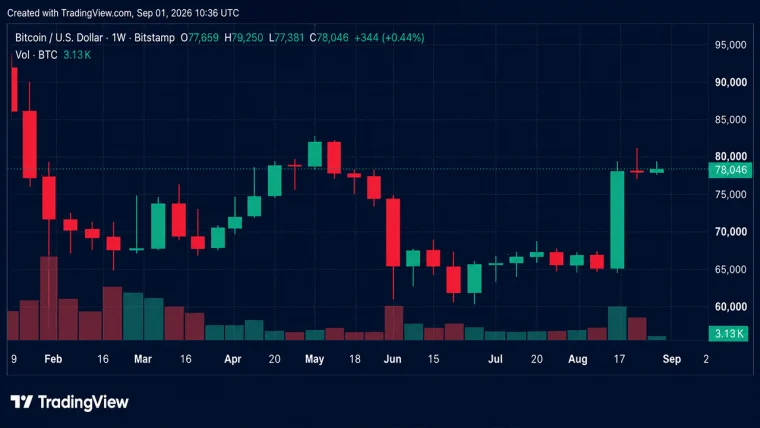
- Bitcoin’s price fluctuated near $77,283 and $78,000 in September 2026 after surging nearly 25% in August.
- A global sell-off in government bonds pushed 10-year Treasury yields to their highest since January 2025.
- Fed Chair decisions after Sept. 11 inflation data and U.S. jobs reports will dictate crypto moves.
On Tuesday, bitcoin’s price kicked off September with characteristic volatility, swinging on either side of $77,200 or $78,000 amid an intensifying global sell-off in government bonds. The price action came just hours after the cryptocurrency locked in one of its biggest monthly performances of 2026, jumping by almost 25% in August.
Market data shows the cryptocurrency initially looked poised to close Monday trading above $79,000, just hours after trading below $77,800. However, as soon as bitcoin breached $79,000, bears took control again, pushing the price back down to $78,200 two hours before midnight.
The pattern repeated when bitcoin reclaimed $79,000 just after 1 a.m. EST, only to plunge below $77,900 two and a half hours later. The cryptocurrency fluctuated around the $78,000 support level before another sell-off sent it tumbling to $77,578 at 9:40 a.m. By 10:24 a.m. EST, bitcoin had reversed those losses to trade above $78,200—a 0.5% daily gain. Consequently, bitcoin’s market capitalization remained virtually unchanged at $1.57 trillion.
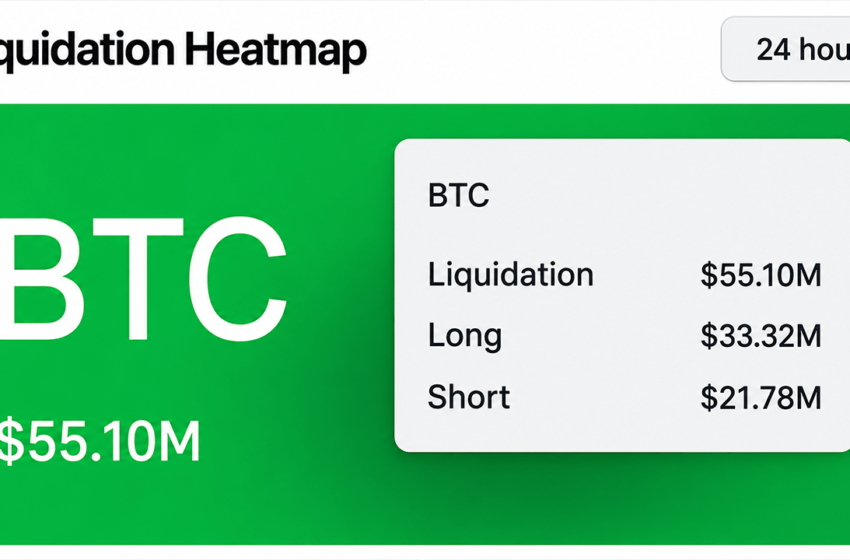
On the derivatives market, the price action narrowed the gap between liquidated long and short bets. Data from Coinglass shows long liquidations reached $33.32 million, compared with $21.7 million in shorts. This contrasted with the broader cryptocurrency market, where liquidated long positions ($102 million) outpaced shorts ($90.6 million).
The heightened volatility across the cryptocurrency market comes against the backdrop of a bond sell-off that has pushed borrowing costs across major economies to multi-decade highs and rattled international financial markets. Rising energy prices—driven by the military conflict in Iran, which briefly pushed Brent crude past $90 a barrel on Sunday—are compounding global inflation concerns.
Global Bond Sell-Off Drives Macro Volatility
The resulting jump in yields is raising borrowing costs across sovereign debt, consumer loans, and corporate debt in the U.S., Japan, the United Kingdom, France, and Germany. In addition, a corporate borrowing boom by technology companies building artificial intelligence infrastructure has swamped fixed-income markets, pulling capital away from sovereign debt.
Government interventions, such as the expanded bond buybacks announced by U.S. Treasury Secretary Scott Bessent, will likely excite crypto investors, who have seen similar liquidity-boosting moves propel bitcoin higher.
Still, market observers believe that the upcoming August employment report and Sept. 11 inflation data will dictate how the Federal Reserve handles interest rates at its Federal Open Market Committee (FOMC) meeting later this month. A rate cut would likely fuel bitcoin’s upward trajectory, whereas standing pat could leave the asset vulnerable to pullbacks.






 Bitcoin
  Ethereum
  Tether
  BNB
BNB  XRP
XRP  USDC
USDC  Solana
  TRON
TRON  Lido Staked Ether
  Figure Heloc
  Hyperliquid
  Zcash
Zcash  Dogecoin
  Rain
Rain  USDS
USDS  Monero
  Wrapped stETH
  LEO Token
  Chainlink
  Wrapped Bitcoin
  WhiteBIT Coin
  Binance Bridged USDT (BNB Smart Chain)
  Cardano
  Wrapped Beacon ETH
  Stellar
  Bitcoin Cash
  Dai
Dai  Wrapped eETH
  Canton
  USD1
USD1  sUSDS
sUSDS  Ethena USDe
  Litecoin
  Gram (prev. Toncoin)
  Coinbase Wrapped BTC
  Uniswap
  Global Dollar
  Hedera
  WETH
WETH  Avalanche
  Shiba Inu
  Sui
Sui  USDT0
USDT0  BlackRock USD Institutional Digital Liquidity Fund
  PayPal USD
  Circle USYC
  Cronos
  Tether Gold
  NEAR Protocol
  MemeCore
  Ethena Staked USDe
  OKB
OKB  Ripple USD
  Ondo US Dollar Yield
  Bittensor
  Aave
Aave  PAX Gold
  Aster
Aster  World Liberty Financial
  Mantle
  Pump.fun
  Little Pepe
  Wrapped BOT
  syrupUSDC
  Morpho
  Sky
Sky  Ondo
Ondo  Ethena
  USDD
USDD  Pepe
Pepe  Polkadot
  HTX DAO
  Internet Computer
  Bitget Token
  Falcon USD
  Worldcoin
  BFUSD
BFUSD  United Stables
  USDGO
USDGO  Spiko Amundi Overnight Swap Fund (EUR)
  Jupiter Perpetuals Liquidity Provider Token
  Ethereum Classic
  Bitway
  Pi Network
  POL (ex-MATIC)
  Blockchain Capital
  Jito Staked SOL
  KuCoin
  Quant
Quant  Kelp DAO Restaked ETH
  Lighter
  Spiko EU T-Bills Money Market Fund
  Binance-Peg WETH
  Janus Henderson Anemoy Treasury Fund
  Rocket Pool ETH
  Gate
Gate  NEXO
NEXO  Binance Bridged USDC (BNB Smart Chain)
  Invesco Short Duration US Government Securities Fund
  JUST
JUST