


The Bitcoin President Is Making Our Case for Us – Op-Ed Bitcoin News
(Originally posted on : Bitcoin News )
What a difference eighteen months makes.
As I write this, a two-week ceasefire between the United States and Iran is hours old. Whether it holds is anyone’s guess. The war that the U.S. and Israel launched on February 28 has already killed American service members, destroyed universities and elementary schools, closed the Strait of Hormuz, and sent shockwaves through every market on the planet. The president who promised to end wars threatened, in his own words, that “a whole civilization will die tonight.” Iran’s ambassador at the United Nations called it incitement to genocide. Experts are debating whether the targeting of bridges, railways, and power grids constitutes war crimes. Children in Tehran are dead.
This is not what we signed up for.
The Bitcoin community did not coalesce around a political candidate so that he could become the latest patron of the military-industrial complex. The very machine, by the way, that Bitcoin was conceptually designed to defund. Satoshi’s whitepaper was published in the wreckage of 2008, a year when the Federal Reserve printed billions to bail out banks while governments spent trillions waging wars most citizens never asked for. Bitcoin was, from its genesis block, a protest against exactly this: the unchecked power of states to debase currency in service of violence.
I want to be clear about something: the crypto community’s natural disgust for war is not a political posture. It is a foundational value. We believe that when governments can’t print money at will, they can’t wage wars at will. That is the entire point. What is happening in Iran is a humanitarian catastrophe. Reports of children killed in residential neighborhoods, a major university bombed, human chains of young people forming around power plants to shield them from American missiles. These are not abstractions. They are the human cost of the very system Bitcoin was built to opt out of.
The two-week ceasefire, brokered through Pakistan’s intervention, is a fragile reprieve. Iran has accepted negotiations in Islamabad beginning Friday. But we have already seen what happens when diplomacy is sabotaged. Iran’s IRGC intelligence chief was assassinated mid-conflict, negotiators have been targeted, and the pattern of setting deadlines only to extend them has made the entire process feel performative. Time will tell if this ceasefire holds.
What won’t change is the math. Wars cost money. Money comes from somewhere. And when governments run out of honest revenue, they print. Every dollar created to fund conflict is a dollar that steals purchasing power from the people who earn it. Every bomb dropped on Iranian bridges is paid for with dollars. Every aircraft carrier repositioned to the Persian Gulf runs on the full faith and credit of the United States Treasury. Every escalation widens the deficit, increases the pressure on the Fed, and further erodes the credibility of the dollar as a neutral global reserve currency.
Bitcoin fixes this. Not through slogans, but through mathematics. A hard cap of 21 million. No Federal Reserve. No emergency printing. No backdoor funding of wars the public never authorized.
To my fellow travelers in the Bitcoin and crypto space: I understand the disillusionment. Many of us believed that political engagement would accelerate adoption and protect our industry. But we should never have expected a politician, any politician, to embody the values of decentralization. That was always our job. Bitcoin doesn’t need a president. It needs users. It needs people who look at what’s unfolding on their screens right now and decide they’d rather hold an asset that no government can inflate to fund the next war.
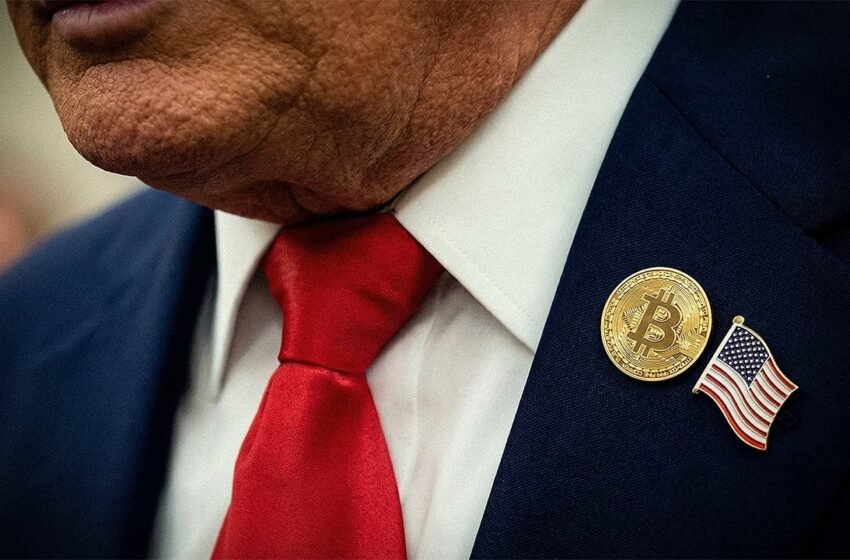
If the intent of Trump as the de facto “ Bitcoin President” is to embolden our beliefs more in voting with our feet, in selling more USD for BTC, then he’s doing a hell of a job.
_________________________________________________________________________
Bitcoin.com accepts no responsibility or liability, and shall not be liable, whether directly or indirectly, for any loss, damage, claim, cost, or expense of any kind, whether actual, alleged, or consequential, arising out of or in connection with the use of, or reliance upon, any content, goods, or services referenced in this article. Any reliance placed on such information is strictly at the reader’s own risk.




 Bitcoin
  Ethereum
  Tether
  XRP
XRP  BNB
BNB  USDC
USDC  Solana
  TRON
TRON  Figure Heloc
  Lido Staked Ether
  Dogecoin
  USDS
USDS  WhiteBIT Coin
  Cardano
  Hyperliquid
  LEO Token
  Wrapped stETH
  Bitcoin Cash
  Chainlink
  Wrapped Bitcoin
  Monero
  Binance Bridged USDT (BNB Smart Chain)
  Ethena USDe
  Wrapped Beacon ETH
  Zcash
Zcash  Canton
  Stellar
  Wrapped eETH
  MemeCore
  Dai
Dai  sUSDS
sUSDS  USD1
USD1  Litecoin
  Avalanche
  Coinbase Wrapped BTC
  Hedera
  PayPal USD
  Sui
Sui  WETH
WETH  Rain
Rain  Shiba Inu
  Bittensor
  USDT0
USDT0  Toncoin
  World Liberty Financial
  Cronos
  Circle USYC
  Tether Gold
  PAX Gold
  BlackRock USD Institutional Digital Liquidity Fund
  Ethena Staked USDe
  Mantle
  Polkadot
  Uniswap
  Global Dollar
  Sky
Sky  OKB
OKB  NEAR Protocol
  Falcon USD
  Pi Network
  Aster
Aster  Little Pepe
  syrupUSDC
  HTX DAO
  Pepe
Pepe  USDD
USDD  Aave
Aave  Internet Computer
  Ripple USD
  Bitget Token
  Ethereum Classic
  BFUSD
BFUSD  Ondo US Dollar Yield
  Ondo
Ondo  Janus Henderson Anemoy Treasury Fund
  KuCoin
  Gate
Gate  Quant
Quant  Render
  Jupiter Perpetuals Liquidity Provider Token
  Pump.fun
  Algorand
  Morpho
  POL (ex-MATIC)
  Spiko EU T-Bills Money Market Fund
  Jito Staked SOL
  Kaspa
Kaspa  Cosmos Hub
  Kelp DAO Restaked ETH
  NEXO
NEXO  USDtb
USDtb  Binance-Peg WETH
  Worldcoin
  Rocket Pool ETH
  Superstate Short Duration U.S. Government Securities Fund (USTB)
  Ethena
  Binance Bridged USDC (BNB Smart Chain)
  Blockchain Capital
  Official Trump
  Wrapped BNB