


Liquid Network at 86% Backing as Bitcoin Redemption Freeze Drags
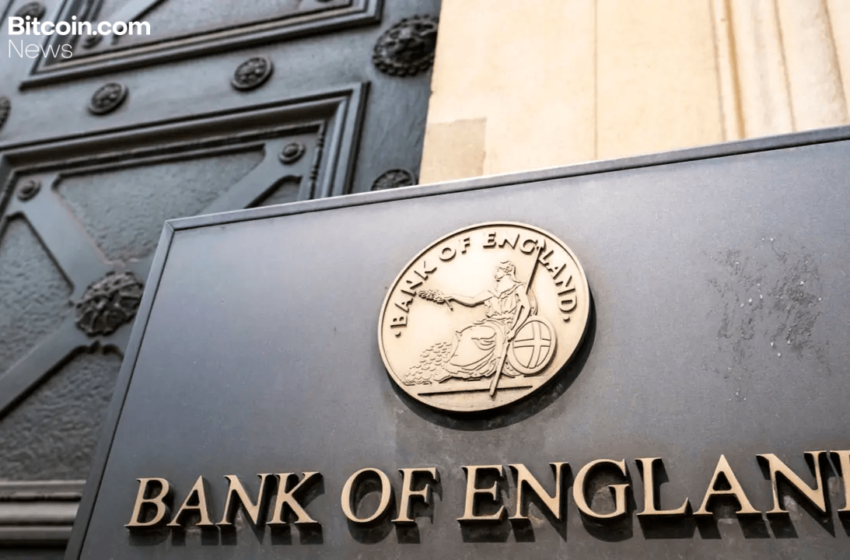
BoE Deputy Governor Breeden Signals Retreat on UK Stablecoin Ownership Limits
(Originally posted on : Bitcoin News )
Key Takeaways
- Bank of England Deputy Governor Sarah Breeden told the Financial Times (FT) its stablecoin ownership limits may have been “overly conservative.”
- The BoE plans to lower its 40% central bank deposit requirement, which is stricter than U.S. rules, hurting UK stablecoin profitability.
- Breeden signaled the BoE sees no urgency to raise rates in June or July 2026, despite markets pricing in 2 to 3 hikes this year.
Bank of England Revisits Stablecoin Limits That Industry Called ‘Cumbersome’
Deputy Governor Sarah Breeden, who oversees financial stability at the UK central bank, told the Financial Times (FT) the BoE is “looking very hard at whether there are different ways we can manage what we think is an important risk as stablecoins come into play.” FT journalists Martin Arnold and Sam Fleming reported on the matter.
Stablecoins are digital tokens pegged one-to-one to a fiat currency such as the U.S. dollar. The BoE had proposed capping individual ownership of UK sterling-based stablecoins at 20,000 pounds per coin, with businesses limited to 10 million pounds, as a guardrail against large deposit outflows from banks.
The report notes that industry groups called those limits operationally “cumbersome.” Breeden acknowledged the criticism directly. “We are genuinely open to thinking whether there are other ways of achieving our objective,” she told the FT.
The BoE is also reconsidering a separate rule requiring at least 40% of assets backing a UK stablecoin to sit on deposit at the central bank, earning no interest. The remainder would be held in sovereign bonds and other liquid assets. The FT editorial noted that the requirement is far stricter than rules in the United States, making UK-based stablecoins less profitable to operate.
Breeden said the 40% figure came from studying the pace of withdrawals during the 2023 Silicon Valley Bank collapse and other recent stress events. “It was based on experience of potential liquidity stress,” she explained. “But we will look hard to see if we have been overly conservative in our thinking there.”
Sterling-based stablecoins currently account for less than 0.5% of a global stablecoin market worth over $320 billion, according to the FT report’s stats. Crypto companies have warned that the UK risks losing ground in the race to build a competitive digital assets sector.
Breeden disclosed to the FT reporters that the central bank wants UK stablecoins to work. “We are keen to create a regime where stablecoins can succeed and can deliver benefits to the users,” she said. “But it is money, and we want to make sure that this new form of money is safe.”
On separate monetary policy questions, Breeden pushed back against any expectation of near-term rate moves. Markets are currently pricing in two or three UK interest rate increases in 2026, with the first expected as early as summer. Breeden told the FT that timeline is not binding.
“We’ve got time to understand firstly the size of the shocks and secondly, how the economy is evolving,” she said. “You’re obviously correct that we can’t wait forever, but we don’t need to do it in June or July.”
Breeden also noted in the interview that she sees limited risk that the conflict in the Middle East will produce the kind of sustained wage and price spiral seen after Russia’s invasion of Ukraine in 2022. She cited a softer labor market and restrictive monetary policy as factors reducing that risk.
The BoE has faced pressure over its ongoing balance sheet reduction, which involves unwinding a 525 billion pound bond portfolio. The FT report noted the central bank estimated last year that the process adds 0.15 to 0.25 percentage points to long-term interest rates, a figure Breeden described as “not enormous.”
The revised stablecoin framework has no finalized timeline, but Breeden’s comments to the Financial Times signal the BoE is prepared to move away from its original approach before any rules take effect.


 Bitcoin
  Ethereum
  Tether
  BNB
BNB  XRP
XRP  USDC
USDC  Solana
  TRON
TRON  Lido Staked Ether
  Figure Heloc
  Zcash
Zcash  Hyperliquid
  Dogecoin
  Chainlink
  USDS
USDS  Wrapped stETH
  Monero
  WhiteBIT Coin
  Wrapped Bitcoin
  Cardano
  LEO Token
  Binance Bridged USDT (BNB Smart Chain)
  NEAR Protocol
  Wrapped Beacon ETH
  Rain
Rain  Stellar
  Bitcoin Cash
  Wrapped eETH
  Canton
  sUSDS
sUSDS  Litecoin
  Uniswap
  Avalanche
  Ethena USDe
  Coinbase Wrapped BTC
  Sui
Sui  Bitway
  Blockchain USD
  Dai
Dai  WETH
WETH  USD1
USD1  Gram (prev. Toncoin)
  Hedera
  USDT0
USDT0  Quant
Quant  Tether Gold
  Bittensor
  Shiba Inu
  Ethena
  Global Dollar
  Cronos
  Ethena Staked USDe
  PayPal USD
  Pump.fun
  Aave
Aave  OKB
OKB  Ondo
Ondo  Ripple USD
  Circle USYC
  Ondo US Dollar Yield
  BlackRock USD Institutional Digital Liquidity Fund
  Little Pepe
  Worldcoin
  Wrapped BOT
  syrupUSDC
  MemeCore
  Polkadot
  Aster
Aster  Mantle
  Sky
Sky  PAX Gold
  Falcon USD
  World Liberty Financial
  USDD
USDD  Internet Computer
  Pepe
Pepe  Morpho
  Spiko Amundi Overnight Swap Fund (EUR)
  United Stables
  HTX DAO
  Bitget Token
  Jupiter Perpetuals Liquidity Provider Token
  Arbitrum
  Ethereum Classic
  BFUSD
BFUSD  USDGO
USDGO  Jupiter
  Jito Staked SOL
  Venice Token
  Algorand
  Kelp DAO Restaked ETH
  Gate
Gate  Kaspa
Kaspa  Binance-Peg WETH
  Rocket Pool ETH
  POL (ex-MATIC)
  JUST
JUST  Cosmos Hub
  Binance Bridged USDC (BNB Smart Chain)
  KuCoin