


Masked Robbers Threaten Pregnant Wife in UK Crypto Home Attack
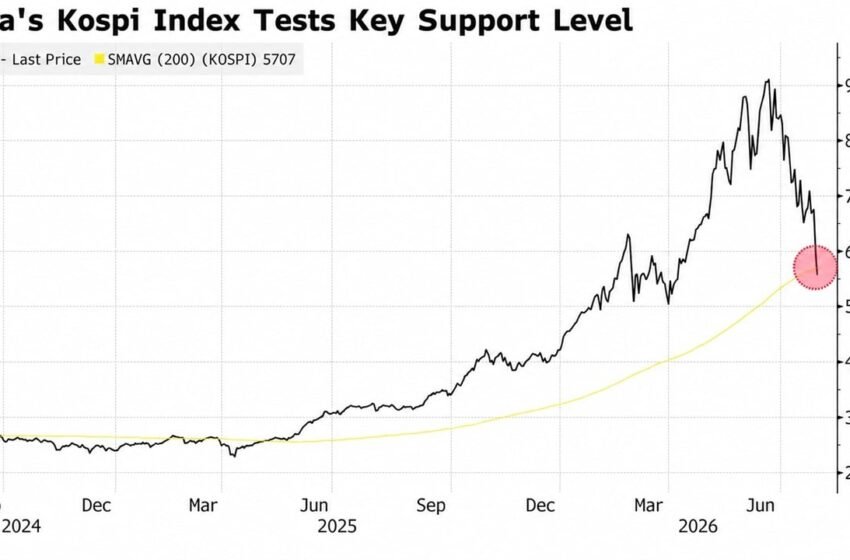
Kospi Falls Below 5,600 in Record Back-to-Back Circuit Breaker as Bitcoin Rises Above $64,000
(Originally posted on : Bitcoin News )
Key Takeaways
- Kospi and Kosdaq triggered circuit breakers on Wednesday, Korea’s first-ever back-to-back halt.
- SK Hynix fell sharply despite reporting a 557% jump in quarterly profit that still missed forecasts.
- Bitcoin rose about 1% toward $64,000, decoupling from Korea’s selloff for a second week straight.
A Record Back-to-Back Circuit Breaker
The Korea Exchange halted trading on both the Kospi and the smaller Kosdaq index for 20 minutes, a mechanism that automatically freezes an entire market for a fixed window once an index falls a set percentage in a single session. Kosdaq triggered its halt first, falling 56.85 points, or 8.05%, to 649.00 at 12:19 p.m. local time. The Kospi followed 13 minutes later, sliding 491.33 points, or 8.15%, from Tuesday’s 6,023.66 close to hit 5,532.33 at 12:32 p.m.
It was the first time in Korean market history the benchmark had triggered circuit breakers on consecutive trading days. The rout followed Tuesday’s eighth circuit breaker of the year, when the Kospi plunged 8.02% intraday and closed down 10.8% after news that a Chinese company had begun mass production of a homegrown deep ultraviolet (DUV) chipmaking tool, threatening Samsung Electronics and SK Hynix’s grip on the memory-chip export market.
Local reporting attributed Wednesday’s extension of the selloff to continued weakness in large semiconductor stocks, heavy foreign selling, and lingering concern over supply-and-demand pressure from single-stock leveraged exchange-traded funds (ETFs) that had ballooned in size earlier this year.
A Profit Beat That Still Wasn’t Enough
The selloff deepened even as SK Hynix reported blowout earnings. The chipmaker’s shares fell sharply Wednesday despite posting a 557% jump in quarterly profit, a result that still missed the elevated expectations Wall Street and Seoul investors had built into the stock after months of AI-driven memory-chip demand.
The mismatch once again brought to light just how far semiconductor valuations across Asia had run ahead of fundamentals, leaving little room for anything short of a blowout to satisfy the market.
Bitcoin Breaks From the Pattern
Bitcoin had tracked Korea’s selloff closely on Tuesday, sliding about 2.7% to roughly $63,000 as the Kospi’s initial crash coincided with rising Federal Reserve rate-hike odds and a stalling CLARITY Act to help drive a wave of crypto liquidations. Subsequently, the last 24 hours have seen the asset climb above $64,400 even as Korea’s second straight circuit breaker played out.
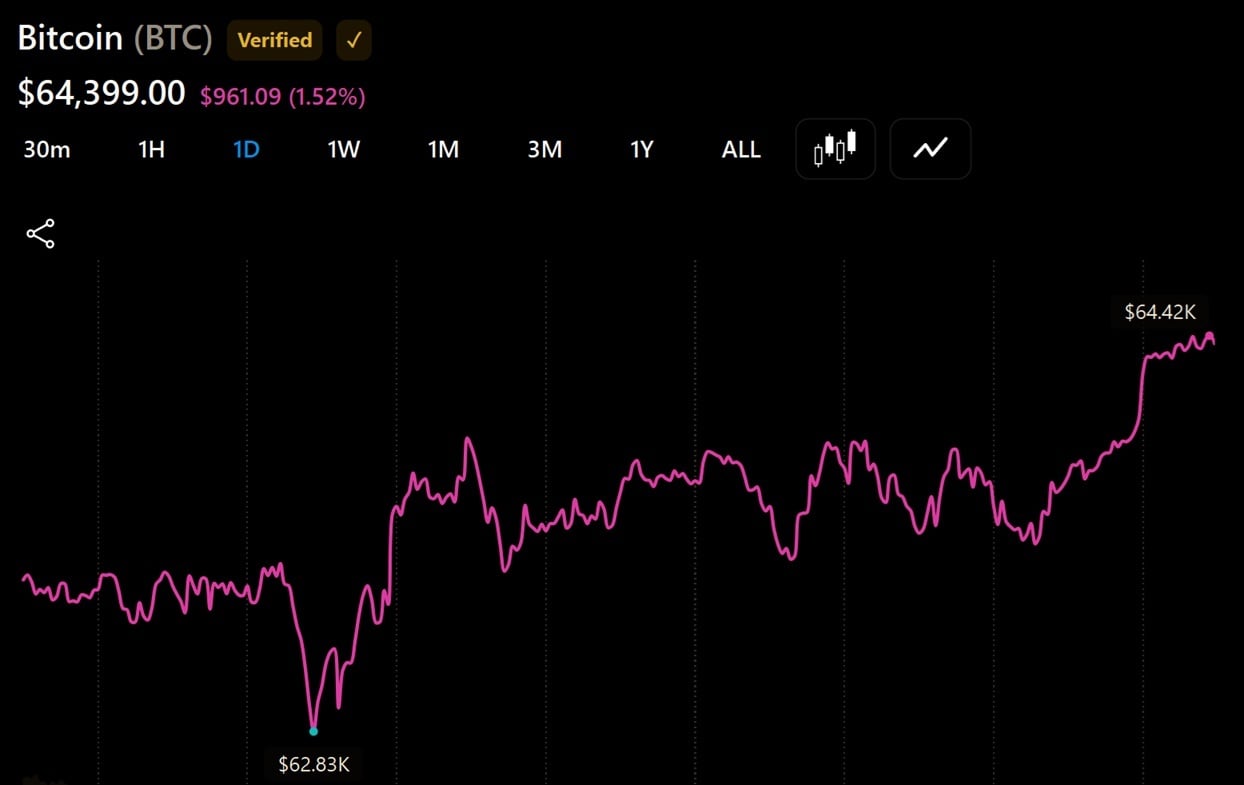
In the meantime, Senate Majority Leader John Thune signaled the CLARITY Act would not clear the chamber before its August recess, before recovering alongside the broader crypto market.
Wednesday marked the second time in seven days that crypto held its ground through a sharp unwind in AI-linked equities, a pattern that suggests bitcoin’s tight correlation with semiconductor and AI stocks may be loosening. Analysts have generally described the relationship between Kospi swings and bitcoin moves as correlated through a shared investor base rather than causally linked, a framing that Wednesday’s divergence complicates without fully resolving.
Samsung Electronics and SK Hynix remain the two most heavily weighted stocks on the index, meaning one more leg down in chip shares could easily trigger another circuit breaker before Korean markets get a chance to stabilize.



 Bitcoin
  Ethereum
  Tether
  BNB
BNB  XRP
XRP  USDC
USDC  Solana
  TRON
TRON  Lido Staked Ether
  Figure Heloc
  Zcash
Zcash  Hyperliquid
  Dogecoin
  Chainlink
  Monero
  Wrapped stETH
  WhiteBIT Coin
  USDS
USDS  Cardano
  Wrapped Bitcoin
  LEO Token
  Binance Bridged USDT (BNB Smart Chain)
  Rain
Rain  Wrapped Beacon ETH
  Stellar
  Bitcoin Cash
  NEAR Protocol
  Wrapped eETH
  Uniswap
  sUSDS
sUSDS  Litecoin
  Ethena USDe
  Avalanche
  Canton
  Coinbase Wrapped BTC
  Sui
Sui  Dai
Dai  Blockchain USD
  Hedera
  WETH
WETH  USD1
USD1  Gram (prev. Toncoin)
  Bitway
  USDT0
USDT0  Tether Gold
  Shiba Inu
  Quant
Quant  Cronos
  Bittensor
  Global Dollar
  PayPal USD
  Ethena Staked USDe
  Aave
Aave  OKB
OKB  Ripple USD
  Pump.fun
  Circle USYC
  MemeCore
  Ondo
Ondo  Ethena
  Ondo US Dollar Yield
  Little Pepe
  BlackRock USD Institutional Digital Liquidity Fund
  Wrapped BOT
  syrupUSDC
  Mantle
  Worldcoin
  Sky
Sky  Polkadot
  Aster
Aster  Internet Computer
  PAX Gold
  Morpho
  Pepe
Pepe  World Liberty Financial
  Falcon USD
  United Stables
  Spiko Amundi Overnight Swap Fund (EUR)
  HTX DAO
  USDD
USDD  Bitget Token
  Jupiter Perpetuals Liquidity Provider Token
  Ethereum Classic
  Venice Token
  BFUSD
BFUSD  Arbitrum
  USDGO
USDGO  Jito Staked SOL
  Gate
Gate  Kaspa
Kaspa  Kelp DAO Restaked ETH
  Algorand
  POL (ex-MATIC)
  Binance-Peg WETH
  Rocket Pool ETH
  JUST
JUST  Jupiter
  KuCoin
  Binance Bridged USDC (BNB Smart Chain)
  Render